9 January 2025
Changing Alloy Wheel Colour: Finishes, Two-Tone & What to Expect
How an alloy wheel colour change is done: colours and finishes, two-tone and diamond cut, what happens in the workshop, timing and current guide prices.
Read the guide
Whether you need to tell your insurer depends on whether the wheels still match the car's factory specification. A like-for-like alloy wheel refurbishment, same size and same finish, puts the wheels back to standard, so there's usually nothing new to declare. A colour or finish change may count as a modification, so tell your insurer. Aftermarket or different-size wheels are a modification and should always be declared.
Below: what insurers mean by a modification, how refurbishment, colour changes and new wheels compare, what the law says about telling your insurer, and what happens if you don't. This is general information, not legal advice; your policy wording decides.
The Financial Ombudsman Service, which settles complaints between drivers and insurers, describes a modification as any change that isn't part of the manufacturer's standard specification. It gives changing alloy wheels and tinted windows as examples of simple modifications, and exhaust upgrades and engine tuning as more complex ones.
Its published cases show the test is practical. In one, it decided an air filter change wasn't reasonably a modification because it made almost no difference to performance. In another, a driver didn't realise their alloy wheels were three inches larger than standard, and the Ombudsman found an average driver wouldn't have spotted the difference, so they had taken reasonable care.
The rule of thumb: if the car now looks or drives differently from how it left the factory, tell your insurer. If you're unsure, ask. It costs a phone call and keeps your cover clear.
The same wheels, stripped and refinished in the original colour and finish, such as silver powder coat or diamond cut. The specification hasn't changed.
The same wheels in a new look: gloss black, gunmetal, two-tone, or diamond cut wheels turned into a solid colour. It isn't the factory finish any more.
Different wheels from the ones the car was built with, including a larger diameter, a different width or another brand.
Fitting the manufacturer's own optional wheels from a higher trim level is still a change from your car's specification, so mention it. For the fitment side of a wheel upgrade, see our alloy wheel buying guide.
For personal car insurance, the Consumer Insurance (Disclosure and Representations) Act 2012 sets out your duty: to take reasonable care not to give the insurer wrong information when you take out, renew or change a policy. In practice, that means answering the insurer's questions accurately, including any question about modifications.
What an insurer can do depends on why the information was wrong and what it would have done if it had known. These are the remedies in Schedule 1 of the Act:
| Situation | What the insurer can do |
|---|---|
| Deliberate or reckless | Cancel the policy as if it never existed and refuse all claims. It doesn't have to return premiums unless keeping them would be unfair. |
| Careless, and the insurer wouldn't have insured the car at all | Cancel the policy and refuse claims, but it must refund the premiums. |
| Careless, and it would have insured on different terms | Treat the policy as if it had those terms, for example an exclusion. |
| Careless, and it would have charged more | Pay a claim only in proportion to the premium you actually paid. |
The Financial Ombudsman's cases include insurers cancelling policies and refusing claims over undeclared modifications. It says it's unlikely to uphold a complaint where the policy clearly asked for modifications and they weren't declared. Where it finds an insurer has acted unfairly, it can tell the insurer to reinstate the policy and pay compensation.
Straightening a bent wheel or welding a crack puts the wheel back to standard rather than changing the car's specification, but insurers vary, so ask yours what it needs. Our guide on whether it's safe to weld alloy wheels covers when a weld is the right repair and what the MOT says about it.
If the damage came from a pothole or an incident you're claiming for, take your own photos before the repair. We can give you a report on the damage for an insurance or pothole claim; our pothole damage claim guide explains how to claim from the council or National Highways.
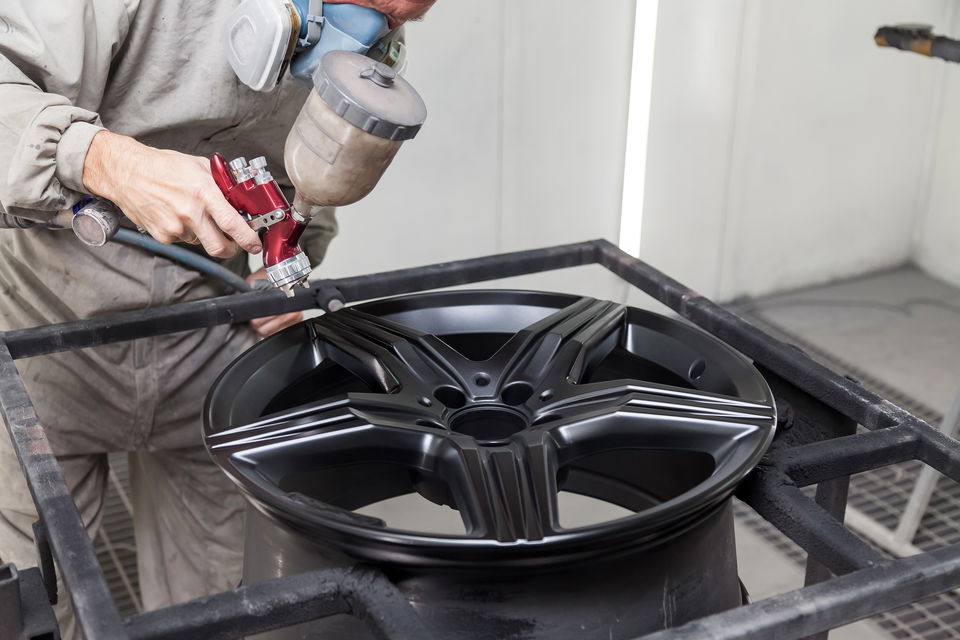
A colour change is done as a full refurbishment: the old finish is stripped, any damage is repaired and the whole wheel is recoated. It's priced as powder coating, per wheel and by size.
Powder coat from £120 a wheel inc. VAT. Back to the original finish in 2–3 days.
Full wheel refurbishmentColours, two-tone and what to expect in the workshop.
Alloy wheel colour changeFrom £144 a wheel inc. VAT. The face is cut again on a lathe and lacquered.
Diamond cut wheel repairWelding and straightening are extra on top of the refurbishment price. Every finish and size is on our price list, and the inspection is free. If you're selling the car, our guide to alloy wheels and resale value covers whether a refurbishment pays for itself.
We restore kerbed, scratched, buckled and corroded alloys across London & Essex. See our alloy wheel repairs, full refurbishment and prices, or send a few photos for a quick quote.
How an alloy wheel colour change is done: colours and finishes, two-tone and diamond cut, what happens in the workshop, timing and current guide prices.
Read the guideWhen a cracked alloy can be welded safely and when it can't, what the MOT manual says about welding defects, insurance and what welding costs.
Read the guideSelling your car? Alloy wheel condition can affect buyer confidence, negotiation, and lease/PCP return costs. This UK guide explains cosmetic vs structural damage and when refurbishment makes sense.
Read the guide
